Mitel CX
Leading the transformation of an enterprise omnichannel contact center — chat, email, and voice in one platform, plus the admin and supervisor tools behind it.
Mitel CX is an exceptionally complex product: multiple communication channels, multiple roles — agent, supervisor, admin — and dense, high-stakes workflows all competing for the same space.
The work has been to take that complexity and make it simpler to use — without losing the depth the product needs.
Transform
We rebuilt the platform from the ground up, including a full code rewrite, and reworked the UX so the core jobs are simpler to accomplish: less manual work, less complexity, and a cleaner UI throughout.
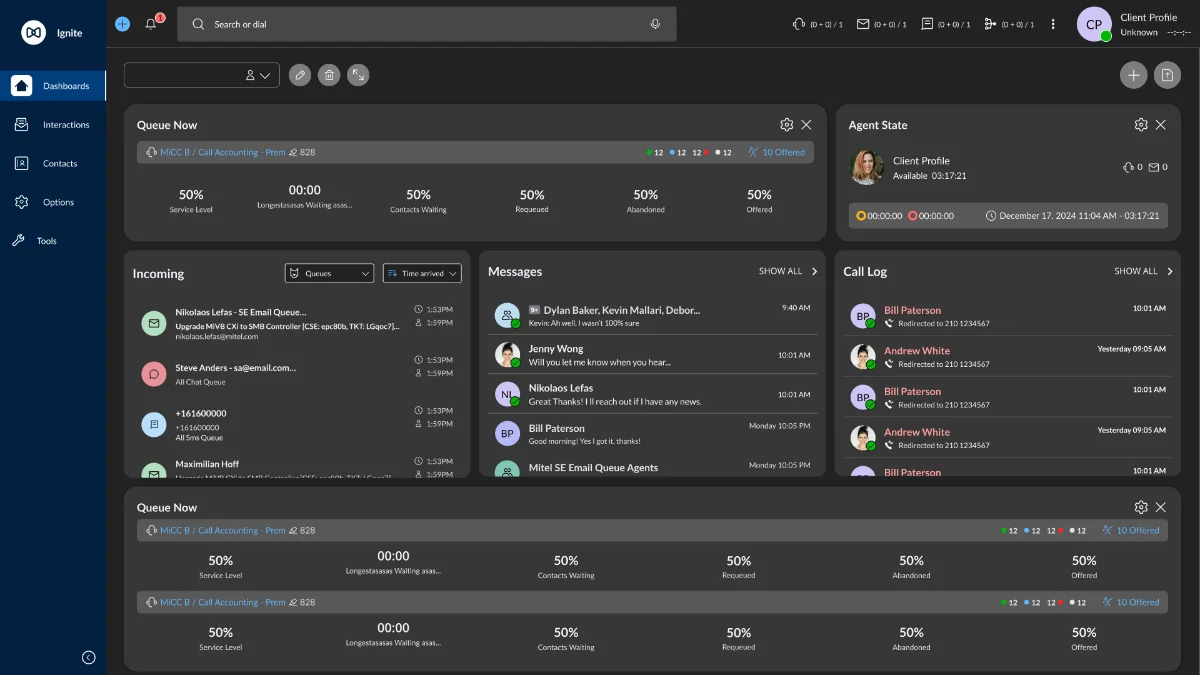
Simplify
The rewrite removed a lot of complexity, but navigation and page count were still heavier than they needed to be. By analysing the real workflows and user flows, I identified where the structure could collapse, and proposed a simplified redesign now being built and rolled out.
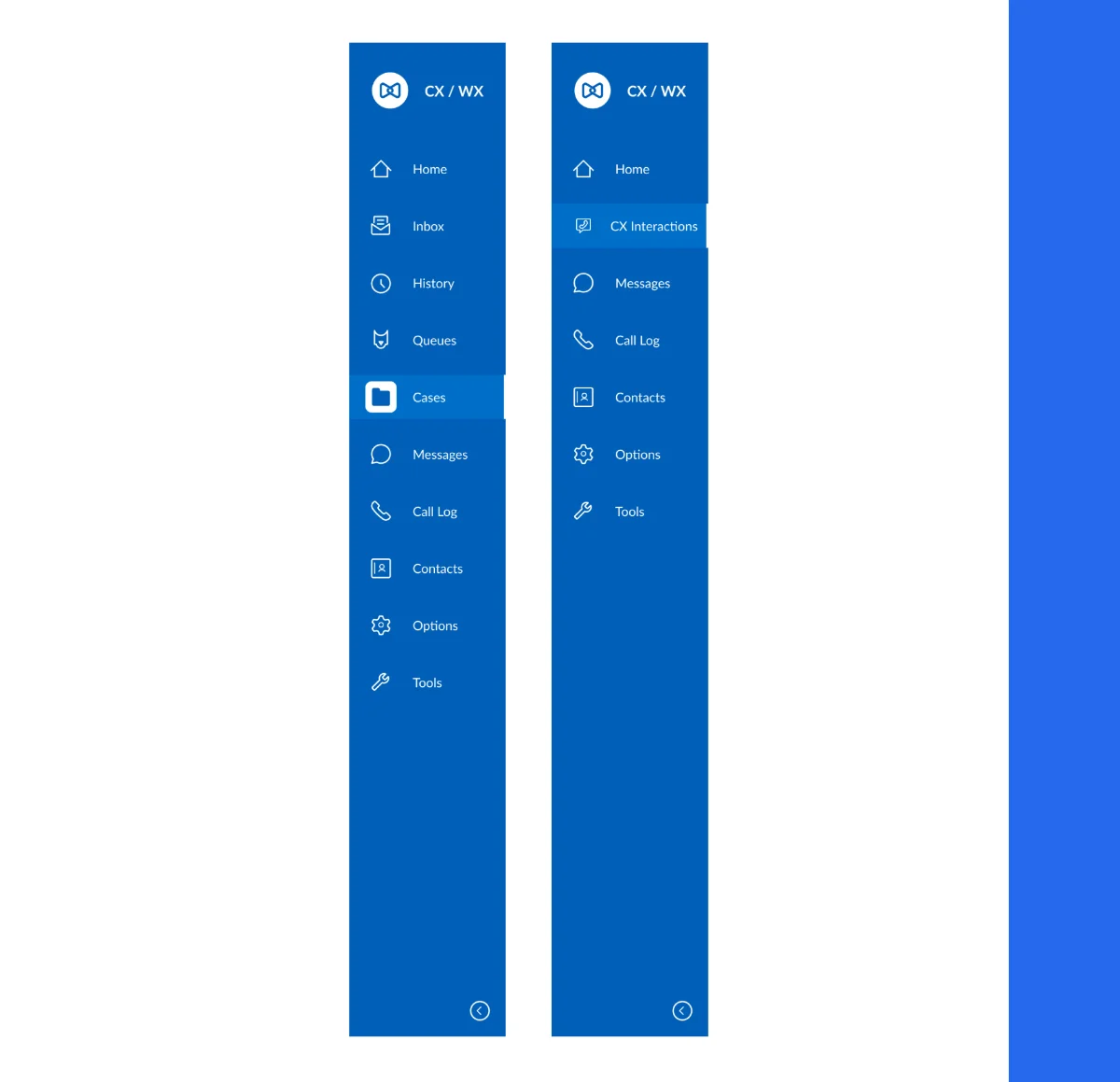
The platform was organised around a data-driven approach to interaction status. In practice, different pages corresponded to different statuses of the same interaction: incoming → Queues, picked up → Inbox, resolved → History, grouped by case → Cases. The same information ended up stored in multiple places, and the interface was structured around status tags rather than the natural context of the support workflow.
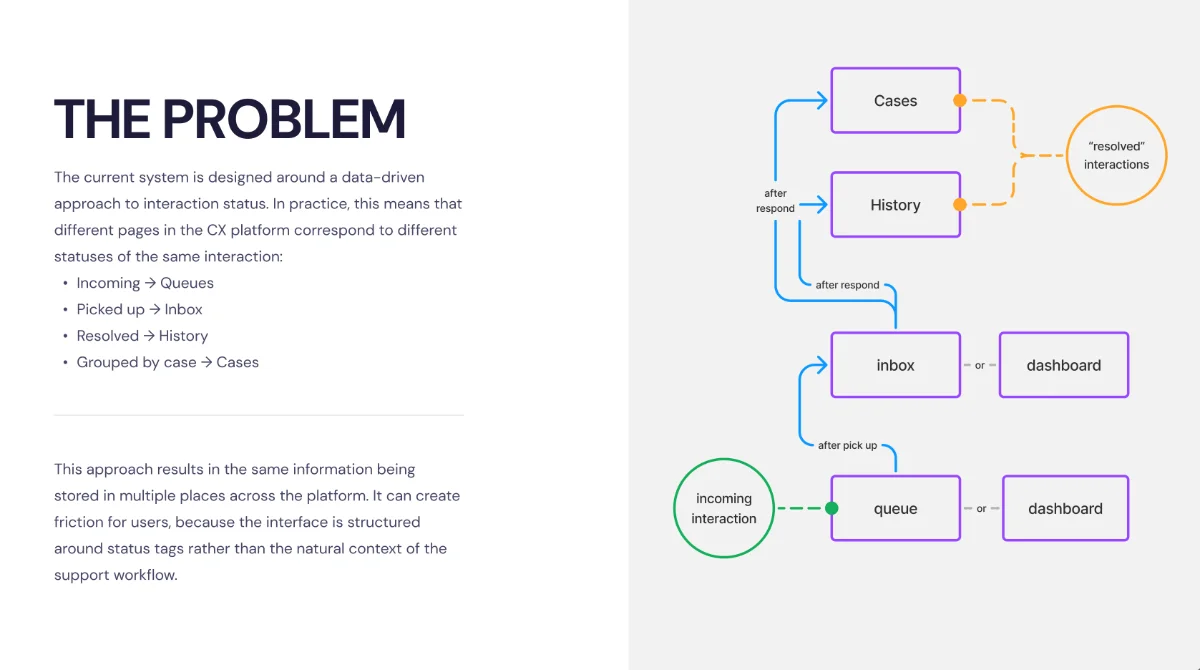
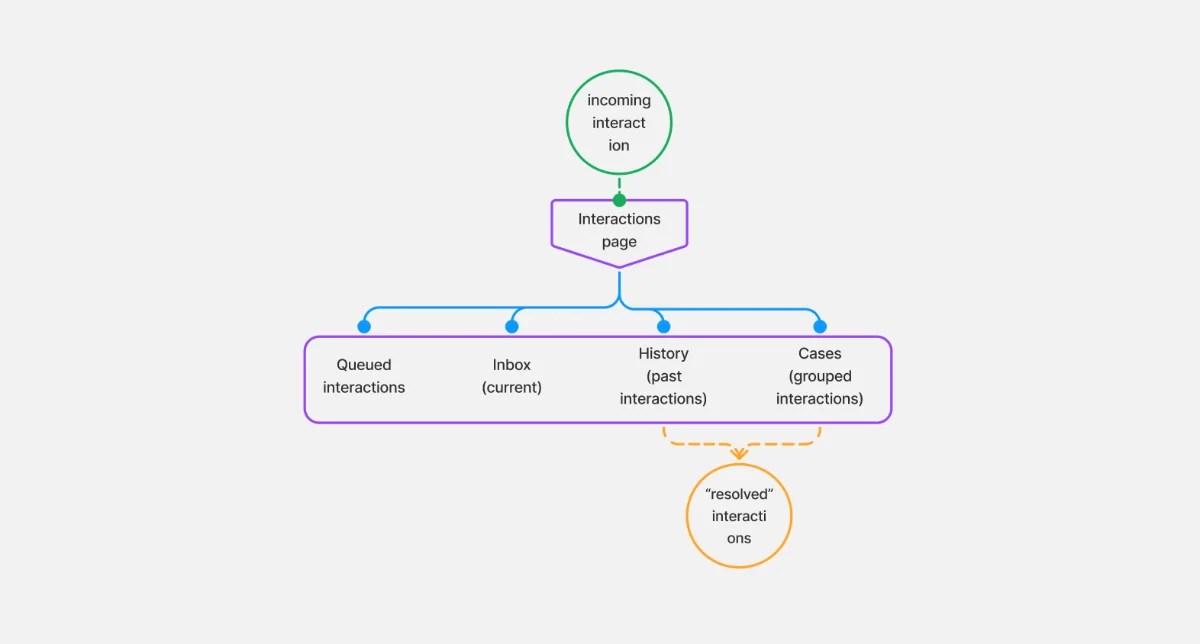
Shift CX to a user-centered model, where interactions are stored and handled the way an agent naturally would, rather than following rigid system codes. All interactions live in one unified area, with intuitive ways to search, navigate, and manage them.
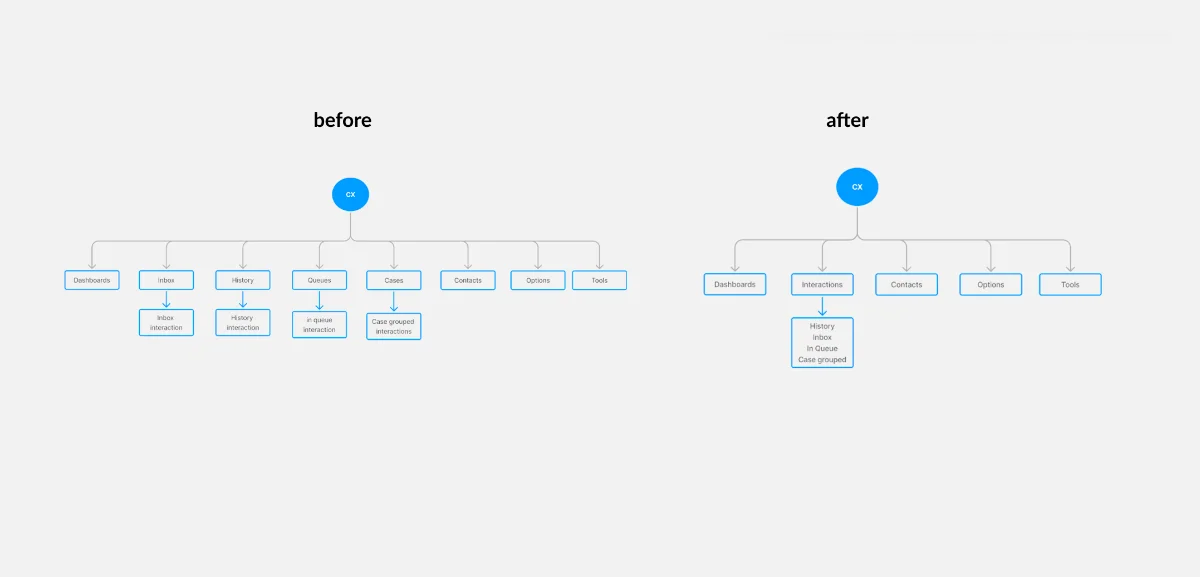
A streamlined information architecture that brings everything together in one place. Fewer pages, less context-switching, and a cleaner, more intuitive structure that supports faster workflows.
Design moves
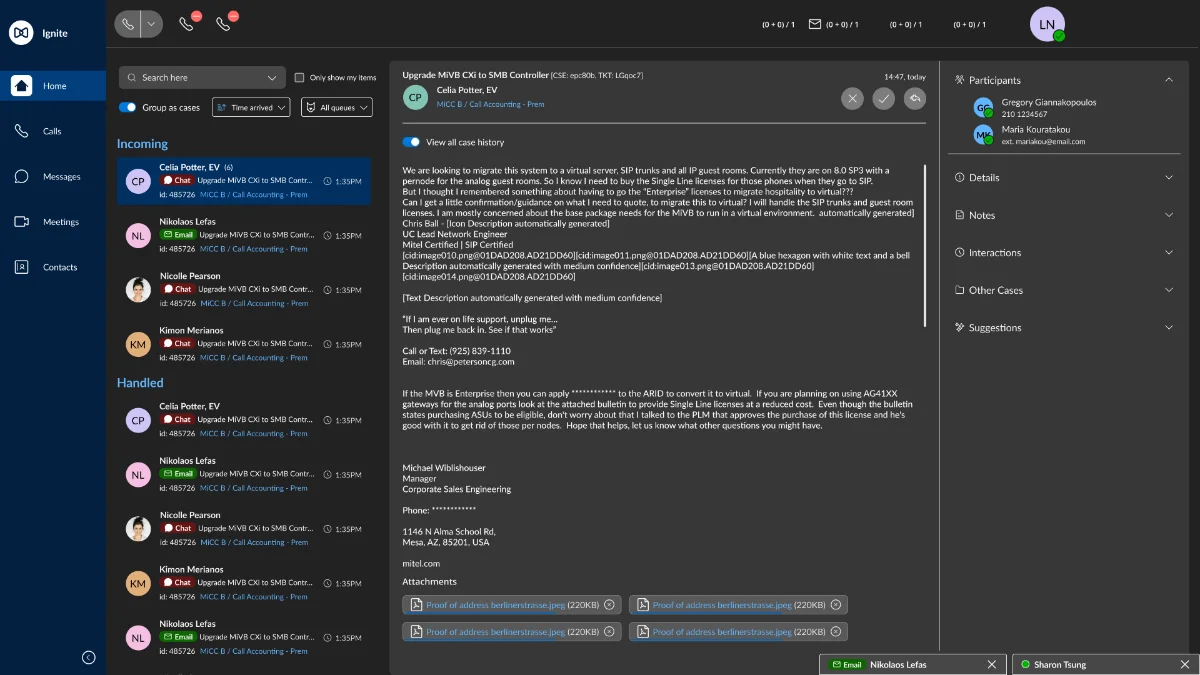
A central place to access, organise, and act on every interaction — past, current, queued, or grouped by case. Powerful filtering and grouping replace the old jump between separate sections.
The side menu collapsed from twelve top-level items to seven, with CX Interactions now serving as a single entry point to the unified flow.
Agents can see participants, details, notes, related interactions, and suggestions alongside the main conversation — without ever leaving it. Less context-switching, the customer stays front and centre.
Assist with AI
The current phase brings real AI assistance into the agent's workspace. I'm designing how it surfaces during live calls and inside written conversations, with one consistent assist layer across voice, chat, and email.
Agents handle high-stakes interactions in real time. They need help — context, suggested answers, signals about how a conversation is going — but anything that interrupts the call or buries the customer behind AI panels makes the job harder, not easier. The design question is how AI shows up without taking over.
Design moves
The call is transcribed in real time and sentiment is surfaced alongside it, so the agent (and supervisor) can read the temperature of the conversation as it unfolds, not after the fact.
The assist layer reads the live transcript, connects it to the knowledge base, and offers the agent matching answers and suggested phrasing in the moment — turning "what do I say next" from a manual lookup into a supported decision.
The same idea, applied to written channels: the assist reads the context of the conversation so far and helps the agent compose, respond, and reference the right information — one consistent AI layer across voice, chat, and email.